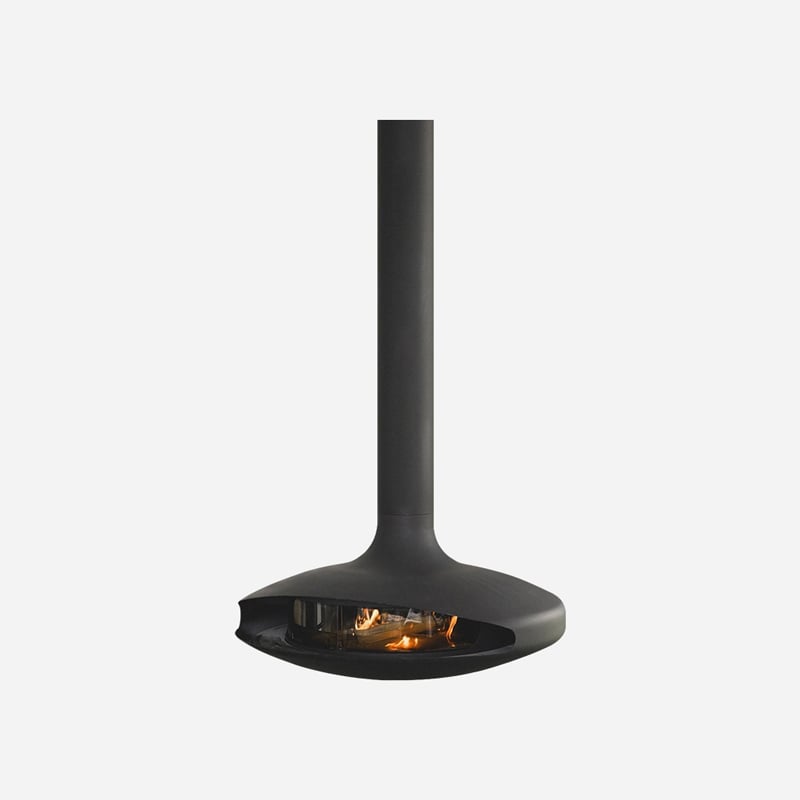
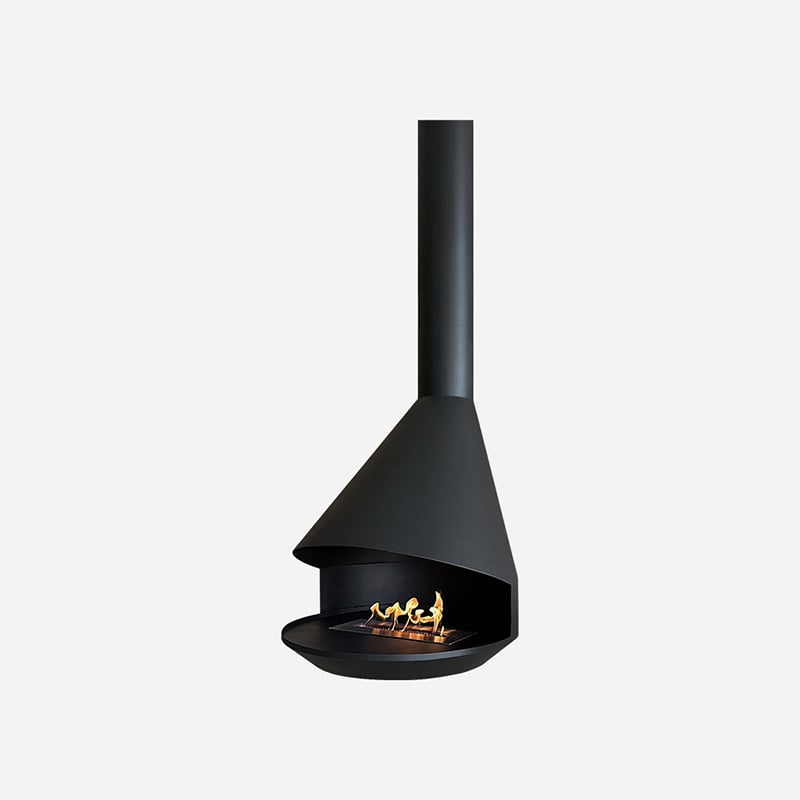
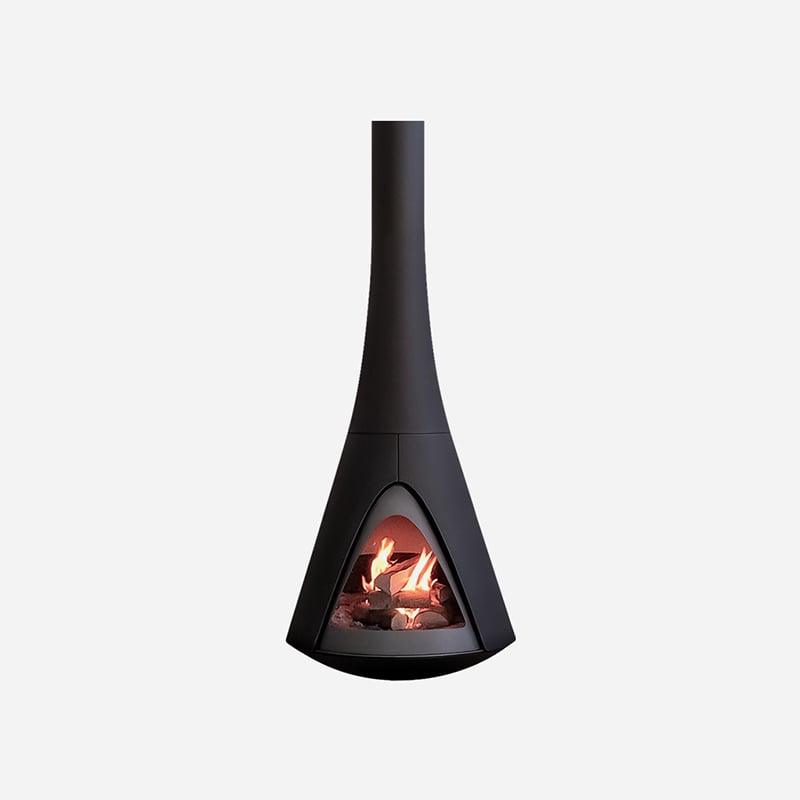
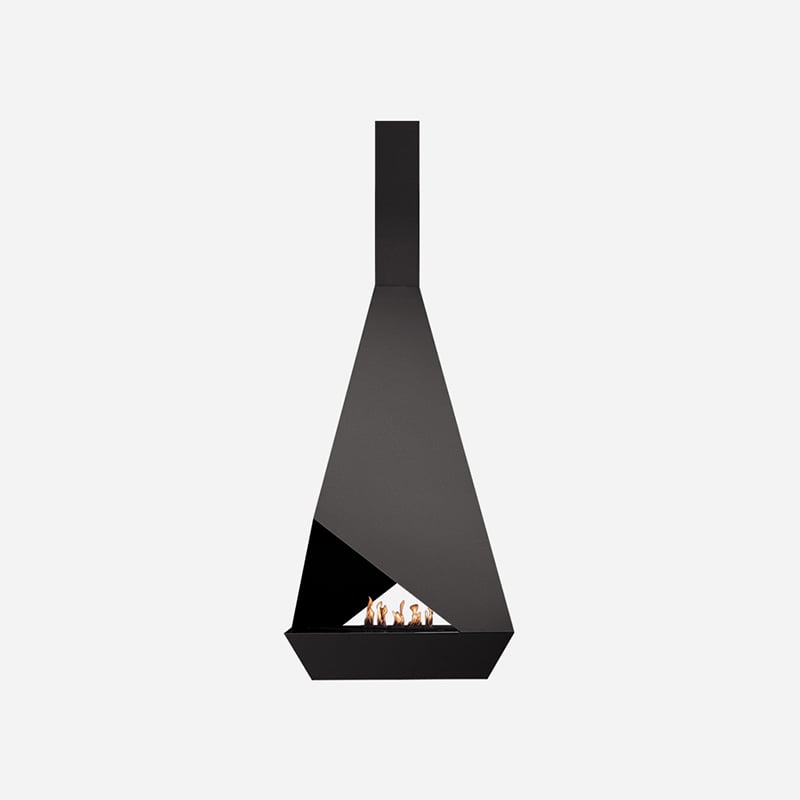
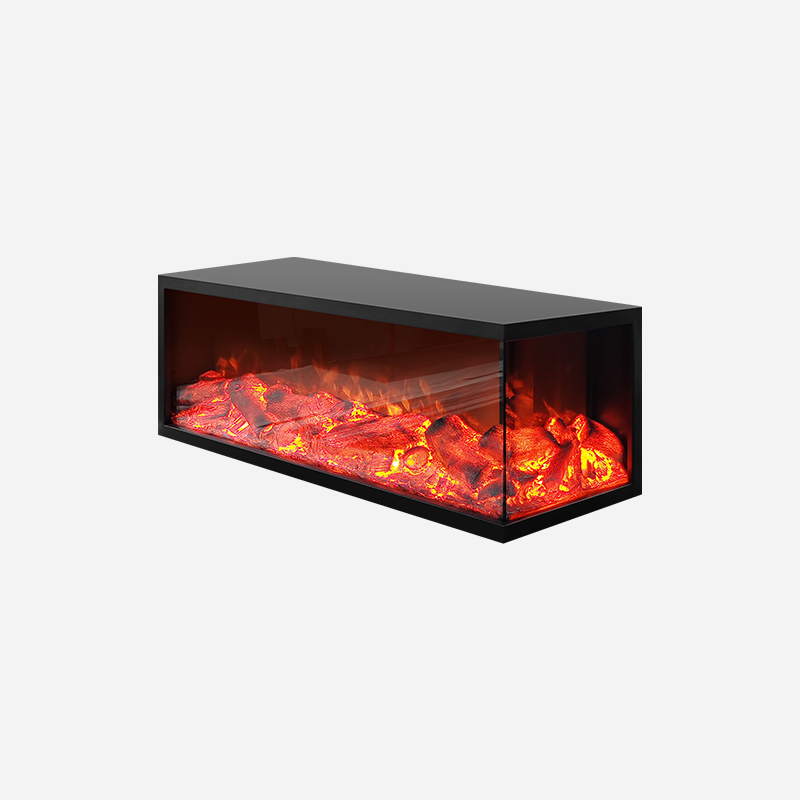
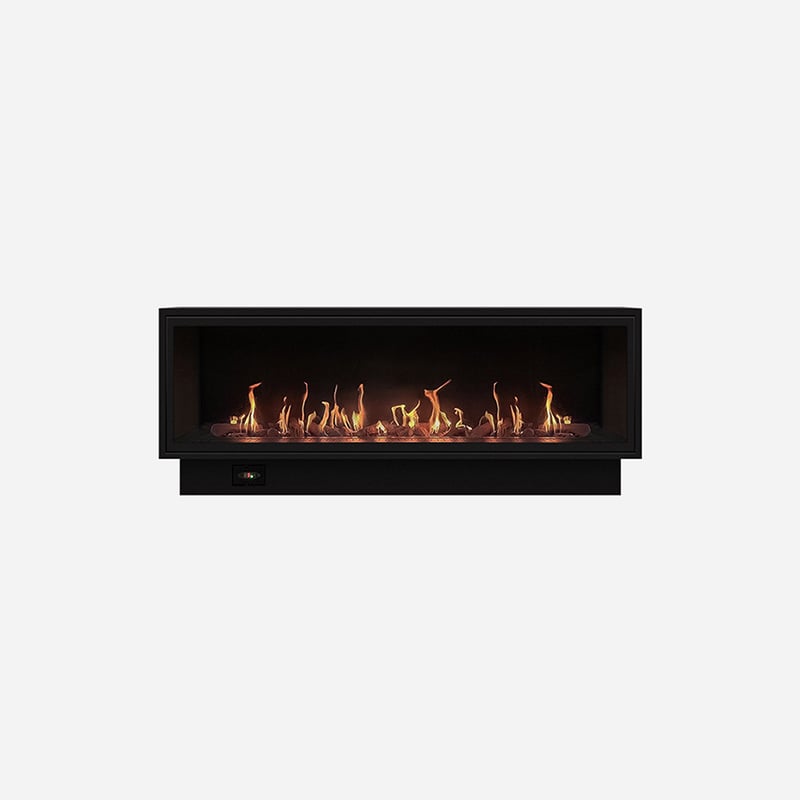
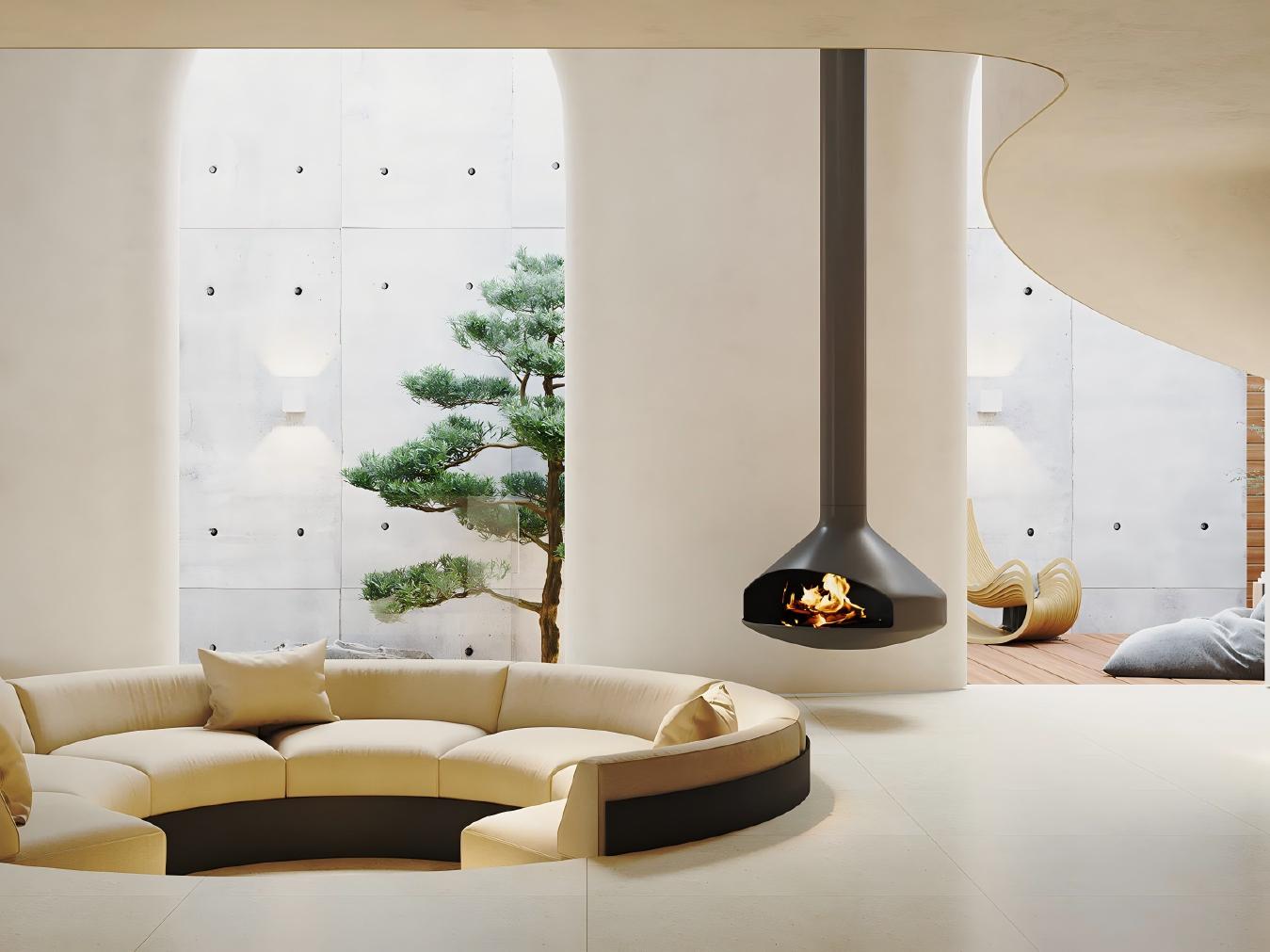
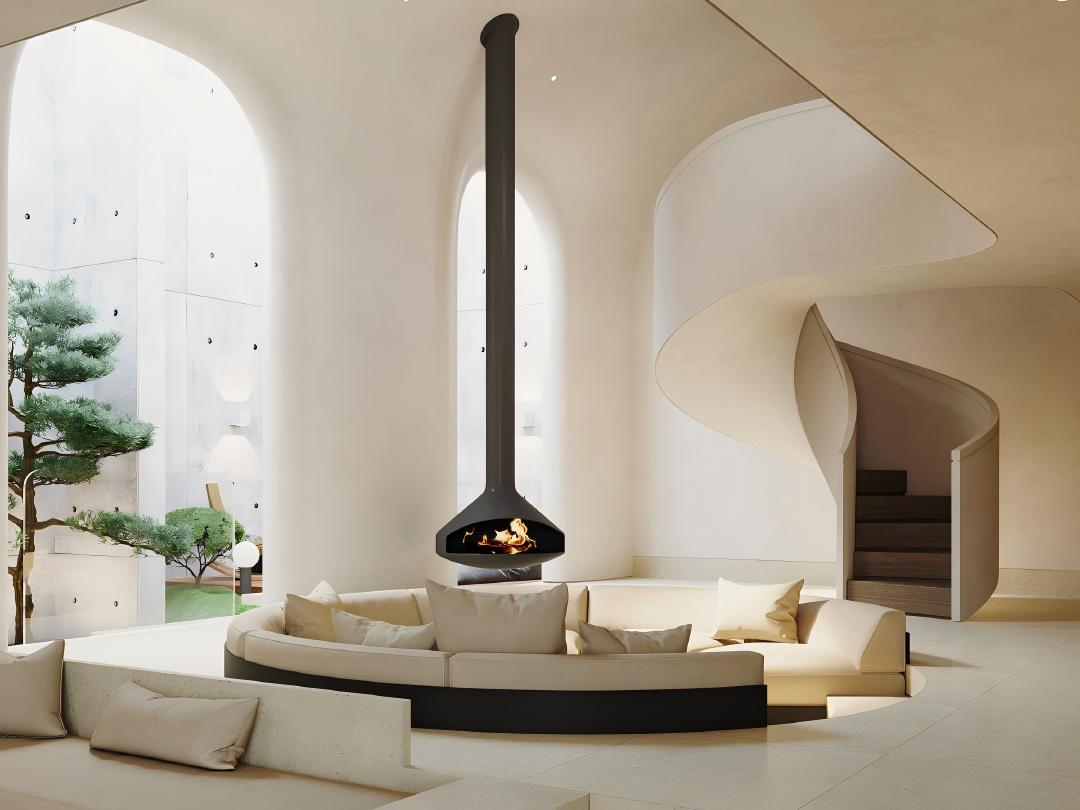
A suspended fireplace is a modern fireplace designed to hang from a wall or structural element rather than sit directly on the floor. Unlike traditional built-in or freestanding fireplaces, a suspended design can reduce floor space requirements while creating a distinctive architectural feature.
Today, suspended fireplaces are increasingly used in modern homes, luxury villas, hotels, resorts, restaurants, and commercial spaces. With the right design, a fireplace can become more than a source of heat—it can become the visual centerpiece of an entire room.
The defining feature of a suspended fireplace is its elevated installation.
Instead of resting directly on the floor, the fireplace is supported by a dedicated mounting structure connected to the building. Depending on the model and project requirements, it may be mounted from the ceiling, attached to a wall, or positioned in the center of a room.
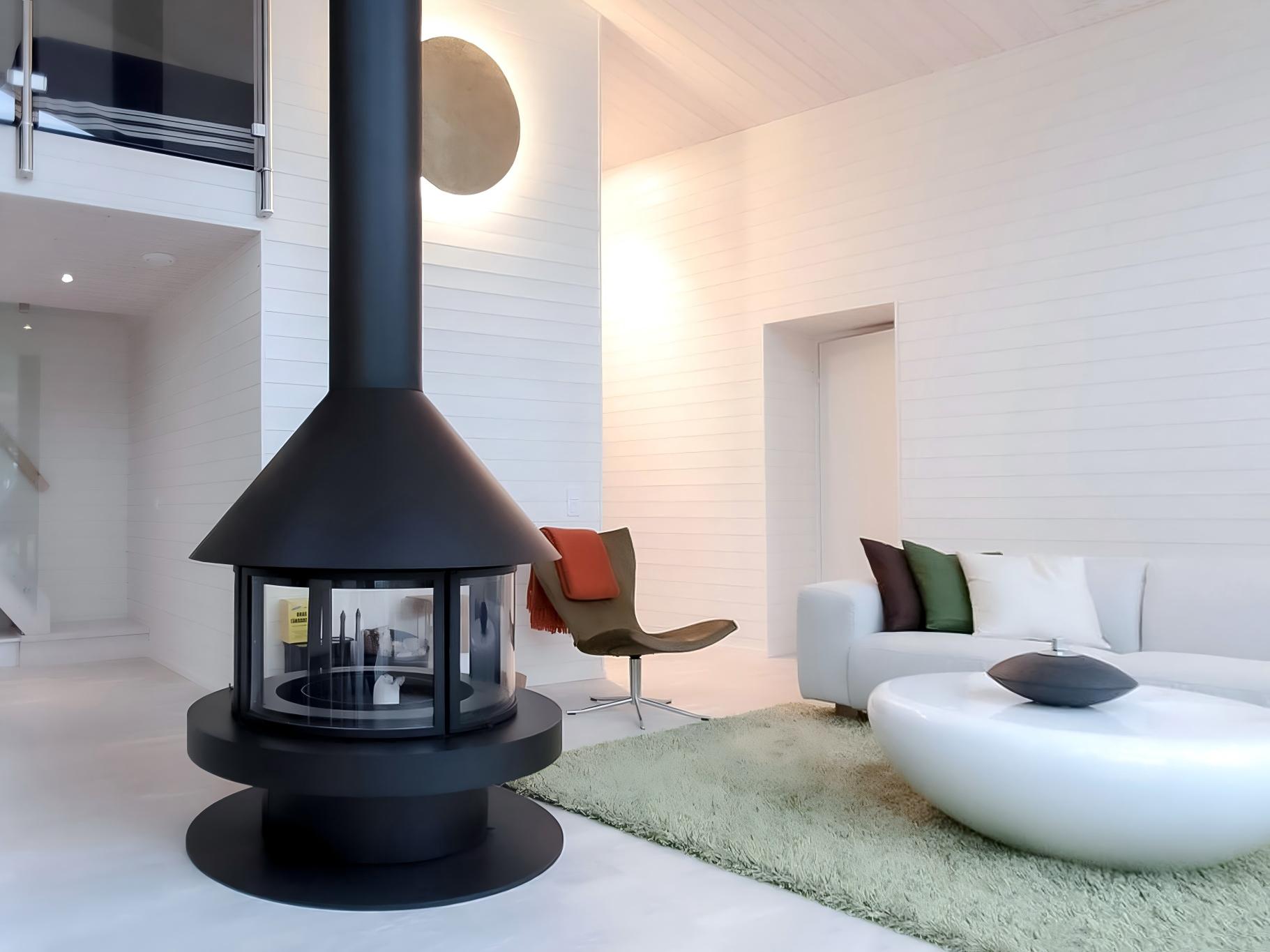
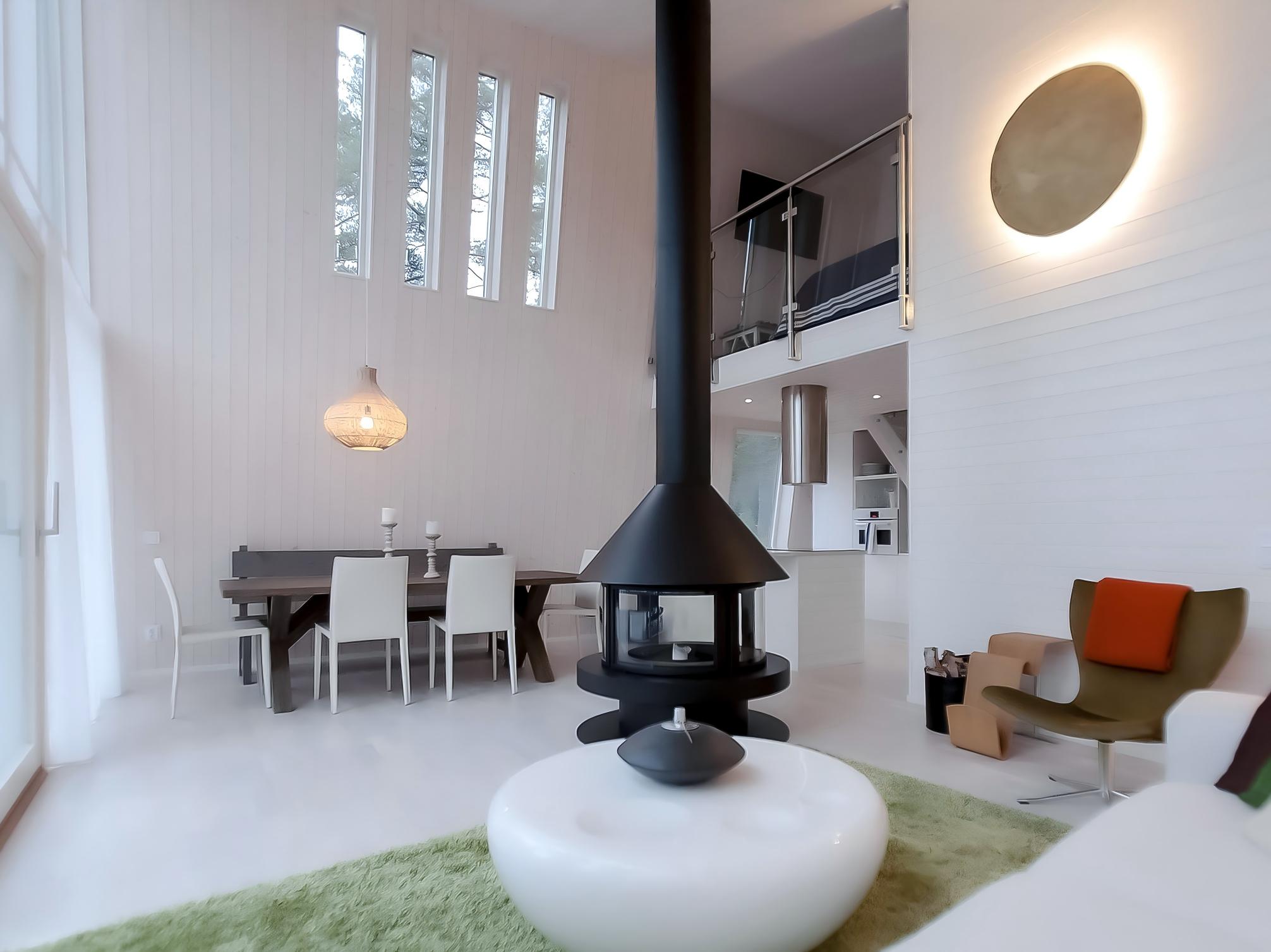
A central suspended fireplace is particularly suitable for open-plan spaces. By positioning the fireplace away from the wall, designers can create a more open layout and allow the fire to be viewed from multiple directions.
This makes suspended fireplaces especially appealing for contemporary architecture and interior design.
Suspended refers to the installation design, not a specific fuel type. Depending on the fuel system, suspended fireplaces can include wood-burning, gas, and bioethanol models.
A suspended wood burning fireplace uses natural firewood to generate heat. Combustion gases are discharged through a chimney or flue system designed for the fireplace.
Modern wood burning models may incorporate optimized combustion chambers and controlled air supply to improve combustion performance and reduce emissions.
A suspended gas fireplace uses natural gas or LP gas to produce a controlled flame through a dedicated burner system.
Depending on the product design and installation requirements, gas fireplaces may use venting systems such as Direct Vent or B-Vent.
A suspended bioethanol fireplace uses liquid bioethanol fuel to create a real flame.
Some models do not require a traditional chimney, providing greater flexibility for certain interior applications. However, installation and ventilation requirements should always follow the manufacturer's specifications.
One of the main differences is how the fireplace interacts with the surrounding space.
|
Feature |
Suspended Fireplace |
Traditional Fireplace |
|
Installation |
Suspended from a structure |
Floor-mounted or built-in |
|
Floor space |
Minimal |
Usually greater |
|
Layout flexibility |
High |
More fixed |
|
Viewing angles |
Multiple or 360° |
Usually front-facing |
|
Design style |
Contemporary |
Traditional or contemporary |
By lifting the fireplace above the floor, a suspended design can create a lighter visual appearance while offering architects more freedom when planning the surrounding space.
A 360-degree suspended fireplace can provide a completely different viewing experience from a conventional wall-mounted fireplace.
Central models can be positioned within the room and designed with multiple viewing surfaces, allowing the flames to be enjoyed from different directions.
Instead of being placed against a wall, the fireplace becomes part of the architectural space itself.
For this reason, a 360° suspended fireplace can serve as an architectural focal point in:
The result is a combination of fire, function, and architectural design.
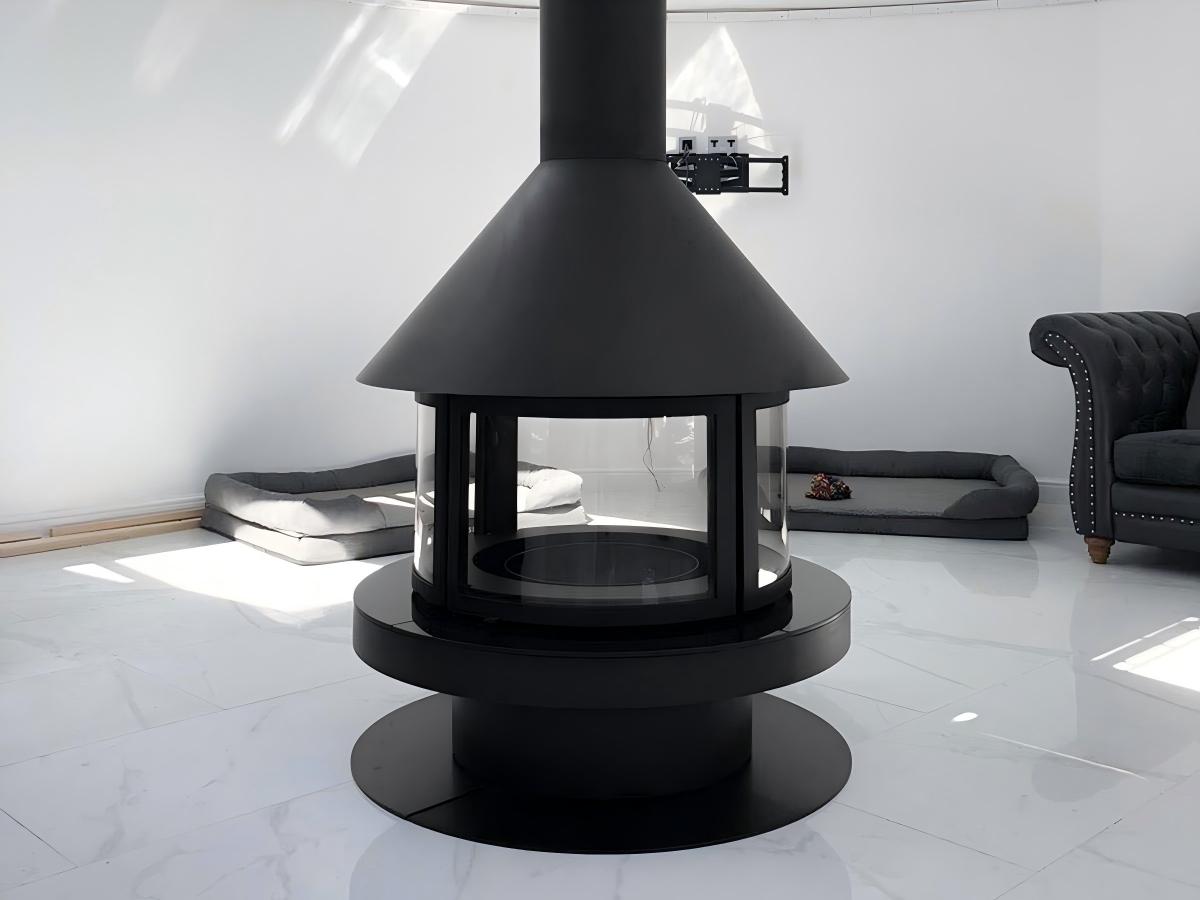
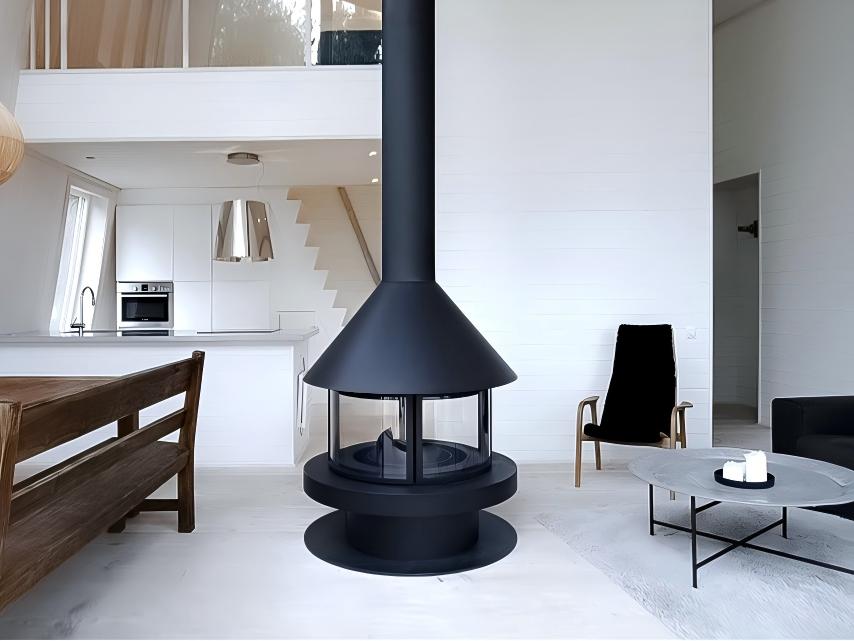
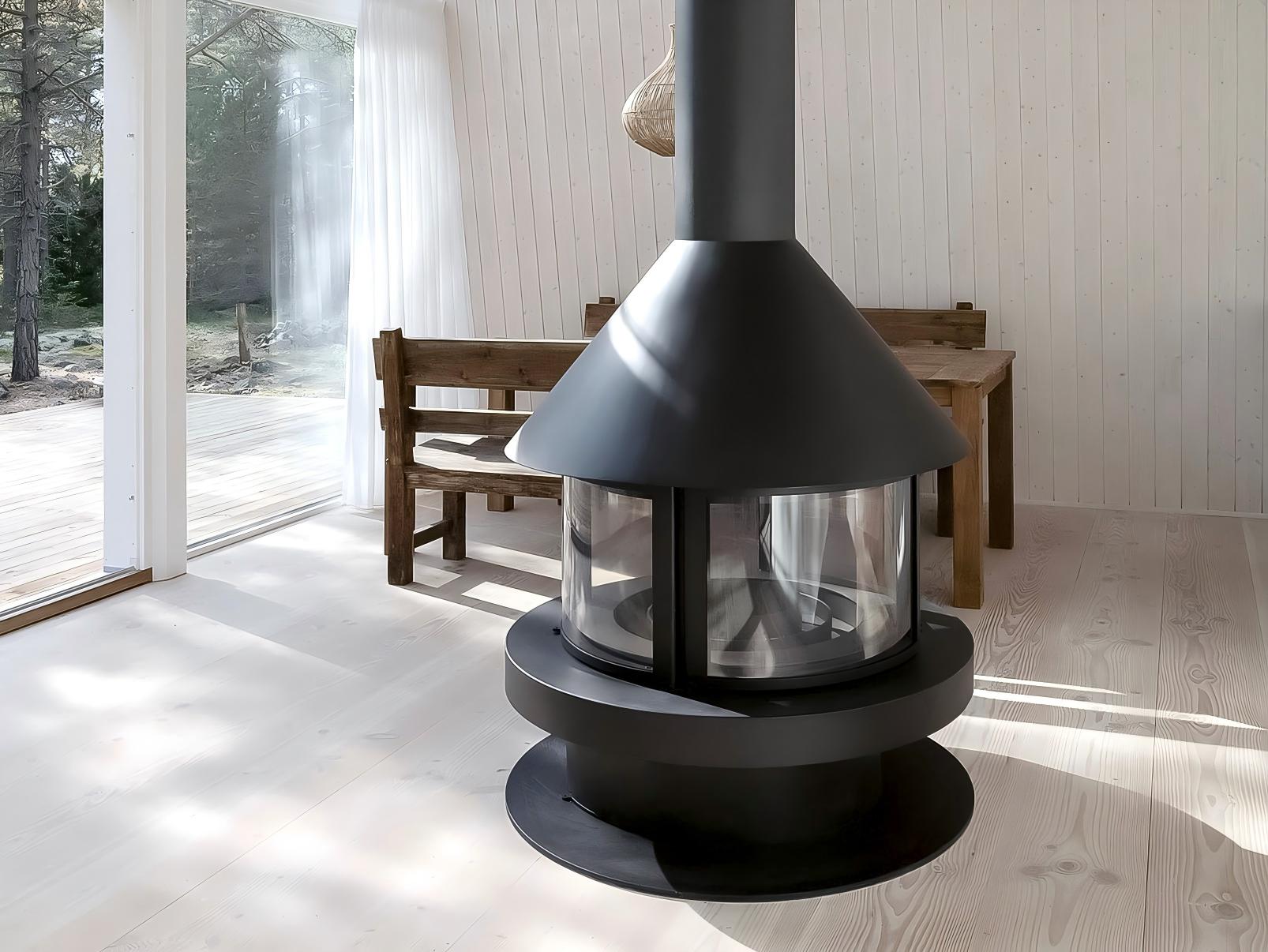
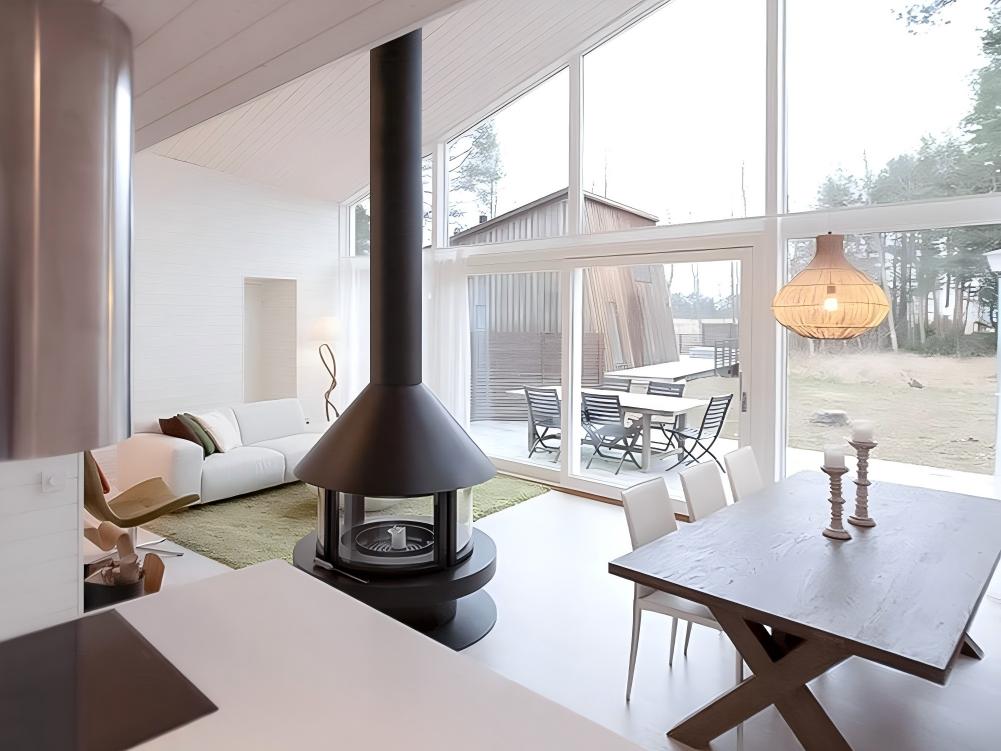
Suspended fireplaces are suitable for a wide range of residential and commercial applications.
Residential Applications
Commercial Applications
They are particularly effective in high-ceiling environments, where the vertical form of the fireplace can complement the scale and proportions of the architecture.
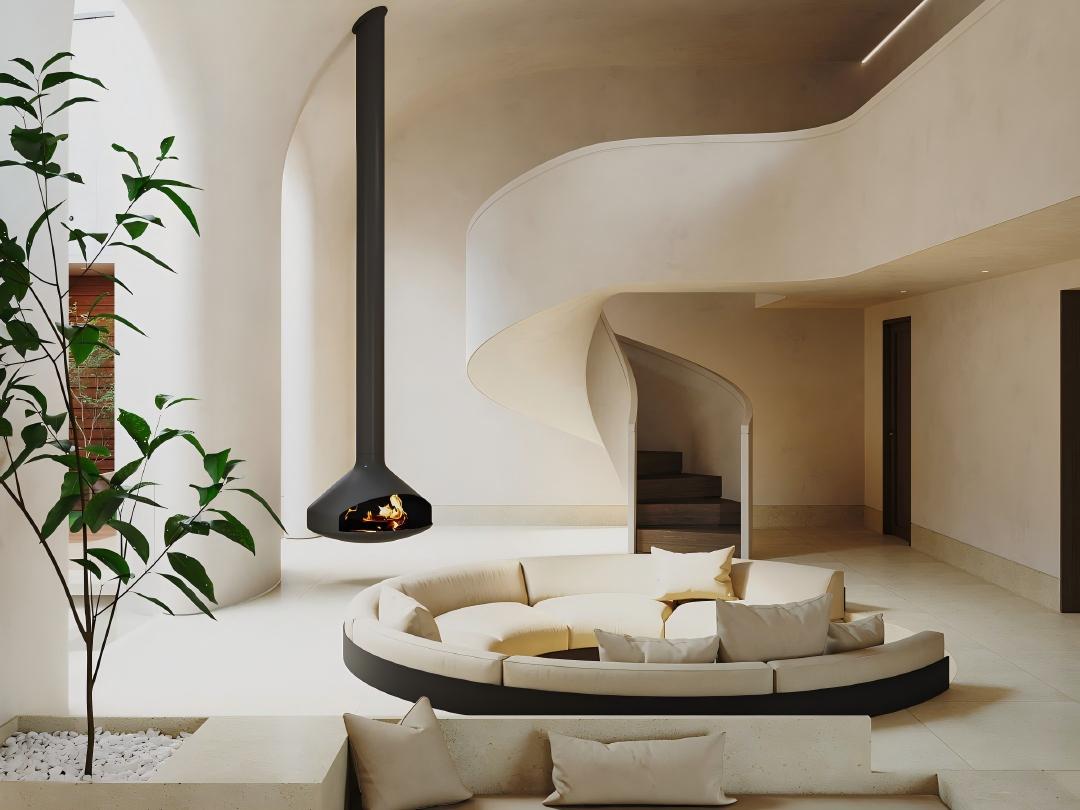
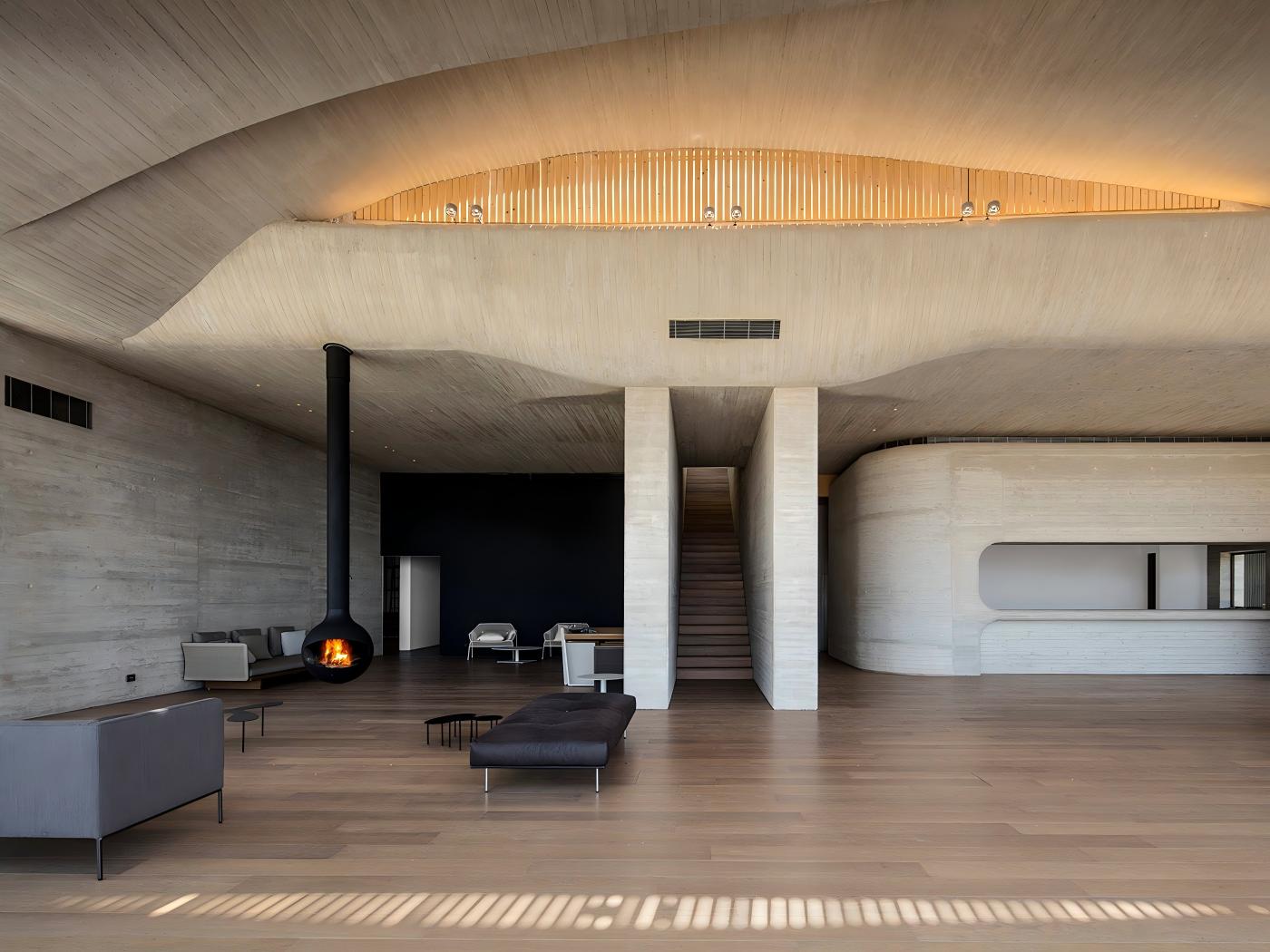
Although suspended fireplaces offer greater design flexibility, installation requires careful planning.
The mounting structure must be capable of supporting the fireplace and associated components. The structural requirements should be considered before installation begins.
Wood burning fireplaces and many gas fireplaces require a properly designed venting or chimney system.
The flue length, bends, routing, roof or wall penetration, and termination location should follow the specific fireplace manufacturer's installation requirements.
The fireplace must maintain the required clearance from walls, ceilings, combustible materials, and other building components.
Clearance requirements vary depending on the fireplace design, fuel type, installation method, and applicable standards.
Installation height affects safety, viewing comfort, room proportions, and heat distribution. It should therefore be determined based on the specific fireplace model and project conditions rather than using a universal height.
Fireplace regulations and certification requirements vary between countries and regions.
For a professional installation, the project should consider:
Product Certification + Manufacturer Installation Manual + Local Building Codes
For residential and commercial projects, suspended fireplaces can often be customized to meet specific design and technical requirements.
Depending on the product, customization may include:
For larger projects, it is recommended to determine the fireplace location, dimensions, structural requirements, and venting route during the early design stage.
This helps architects, contractors, and installers integrate the fireplace into the building more effectively.
A suspended fireplace is more than a traditional fireplace lifted off the floor. It is a design approach that combines fire, architecture, heating, and spatial experience.
From modern homes and luxury villas to hotels, resorts, and commercial spaces, suspended fireplaces can provide flexible design possibilities through different sizes, fuel types, viewing configurations, and installation methods.
When selecting a suspended fireplace, appearance is only one consideration. The project should also take into account structural support, heat output, fuel type, venting, clearances, installation requirements, and local regulations.
With the right design and installation, a suspended fireplace can transform a functional heating appliance into the visual centerpiece of an entire architectural space.
What is a suspended fireplace?
A suspended fireplace is a fireplace mounted above the floor using a wall, ceiling, or structural support system. Depending on the design, it can provide multiple viewing angles or 360-degree views of the fire.
What types of suspended fireplaces are available?
The most common types include suspended wood burning fireplaces, suspended gas fireplaces, and suspended bioethanol fireplaces.
Can a suspended fireplace be installed in the center of a room?
Yes. Certain models are specifically designed for central installation. Structural support, venting, clearances, and local installation requirements must be considered.
Does a suspended fireplace require a chimney?
It depends on the fuel type and product design. Wood burning fireplaces generally require a chimney or flue system, while gas fireplaces may use Direct Vent or B-Vent systems. Some bioethanol fireplaces may not require a traditional chimney.
 Hot News
2026-08-17
 EN
EN